November 11, 2025 · Dr. Lisa Vredevoogd, MD
Recognizing Vision Problems in Your Child
Vision problems in young children can be hard to spot — kids adapt. Here are three common conditions and what to watch for as a parent.
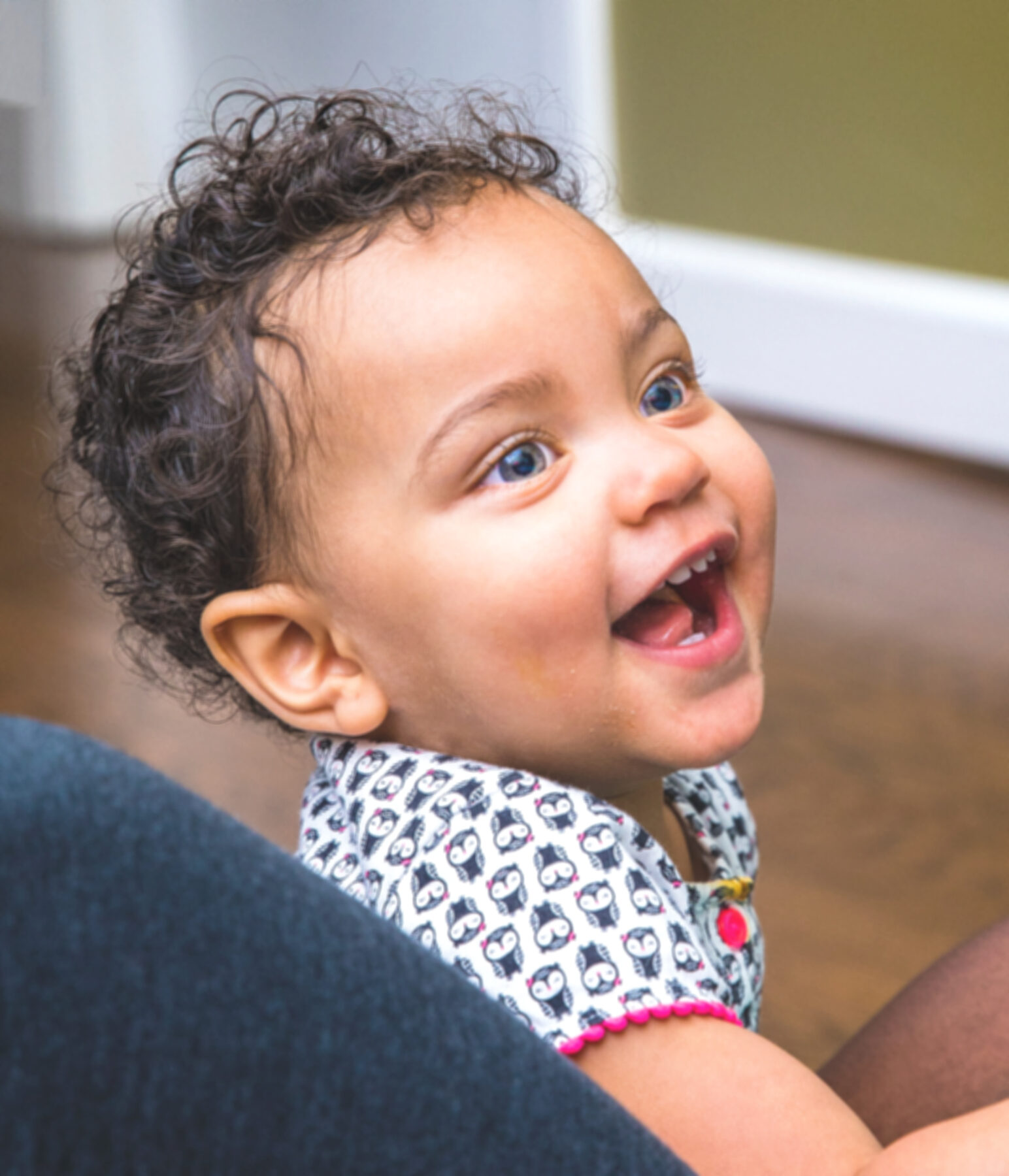
Children — especially toddlers and infants — often can’t tell you when their vision isn’t right. They don’t know any different. Most of the time, an eye condition is caught either by a pediatrician’s vision screen or by a parent who noticed something subtle and decided to get it checked. This post covers the three things most worth knowing.
A note before we dive in: All children should have a basic vision check with their pediatrician between ages 3 and 5, even if nothing seems off. If your pediatrician flags anything, or if you notice any of the signs below, schedule a comprehensive eye exam.
1. Refractive errors
This is the big category — nearsightedness, farsightedness, and astigmatism. In adults, you’d know because things are blurry. In kids, they just adapt to whatever they see and don’t mention it.
Watch for:
- Squinting
- Tilting or turning the head to look at something
- Holding books or tablets very close to the face
- Sitting unusually close to the TV
- Complaints of headaches after reading, homework, or screen time
- Eye strain or fatigue at the end of the school day
Refractive errors are the most common vision issue and almost always treatable with glasses. Early detection and correction is especially important before about age 7, because it helps prevent amblyopia from developing.
2. Amblyopia (lazy eye)
Amblyopia is when one eye develops poorer vision than the other and the brain starts favoring the stronger eye. It’s the leading cause of preventable vision loss in children, and it almost always has no outward symptoms early on.
Watch for:
- Squinting, especially with one eye
- Head tilting that seems to have a pattern
- Eye rubbing
- Closing one eye when focusing
- Difficulty with close-up work (school, drawing, reading)
- Bumping into things more than peers — subtle depth perception issues
Amblyopia is very treatable, but it gets harder to treat after about age 7. If you suspect it, don’t wait — the window of easy treatment closes.
3. Strabismus (eye misalignment)
Strabismus is when the eyes don’t point in the same direction. One eye turns in, out, up, or down. In babies under four months, eyes that don’t fully coordinate are usually normal; after four months, persistent misalignment needs to be evaluated.
Watch for:
- Head tilting or turning to look at things
- An eye that visibly points in a different direction — constant or intermittent
- Frequent squinting
- Closing one eye in bright light
- Complaints of double vision (in older children who can articulate it)
Strabismus that’s untreated can lead to amblyopia, and it rarely “just goes away” on its own past four months old. It’s very treatable — usually with glasses or patching, sometimes with surgery.
The pattern: the earlier, the easier
The theme across all three: they’re more treatable the earlier we catch them. A 4-year-old starting glasses has a much easier path than a 9-year-old. An amblyopia treated before age 7 recovers well; after age 7, gains are slower and less complete. A strabismus caught early often responds to glasses alone; caught late, it sometimes needs surgery.
None of this means you need to be paranoid. It just means: when your pediatrician flags something on a vision screen, follow through. When you notice your kid tilting their head every time they look at the TV, schedule a visit. It takes an hour of your afternoon to rule it out — and potentially years off a treatment course if something’s actually going on.
If you’ve noticed something and you’re not sure, give us a call at (616) 796-9995. An evaluation is straightforward; the worst case is you leave an hour later knowing nothing is wrong.